
Engineered magnetic material production
Focused-field array

Halbach arrays.
Field where you need it.

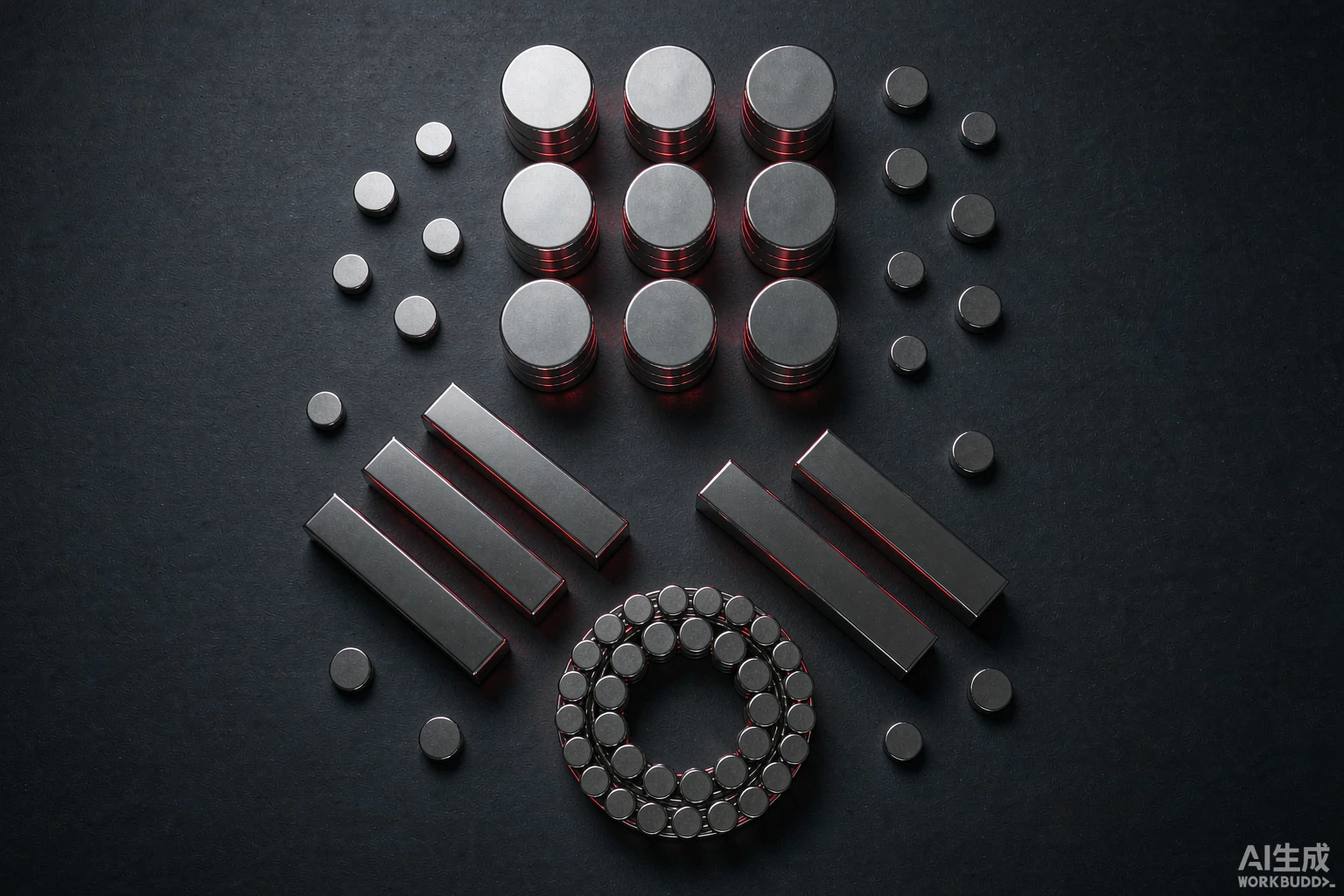
Engineered Halbach configurations that concentrate magnetic field on one side of the array — eliminating the need for back-iron and reducing total mass. Linear and cylindrical geometries, field-mapped against your working gap target.

Architectures

Three Halbach configurations.

  • Linear Halbach

    Concentrates magnetic field on one side of a linear array. Used in maglev, linear motors, particle accelerators and free-electron lasers.

  • Cylindrical Halbach

    Concentrates field inside (or outside) a cylinder with no need for back-iron. Used in motors, magnetic refrigeration and MRI.

  • Segmented Halbach

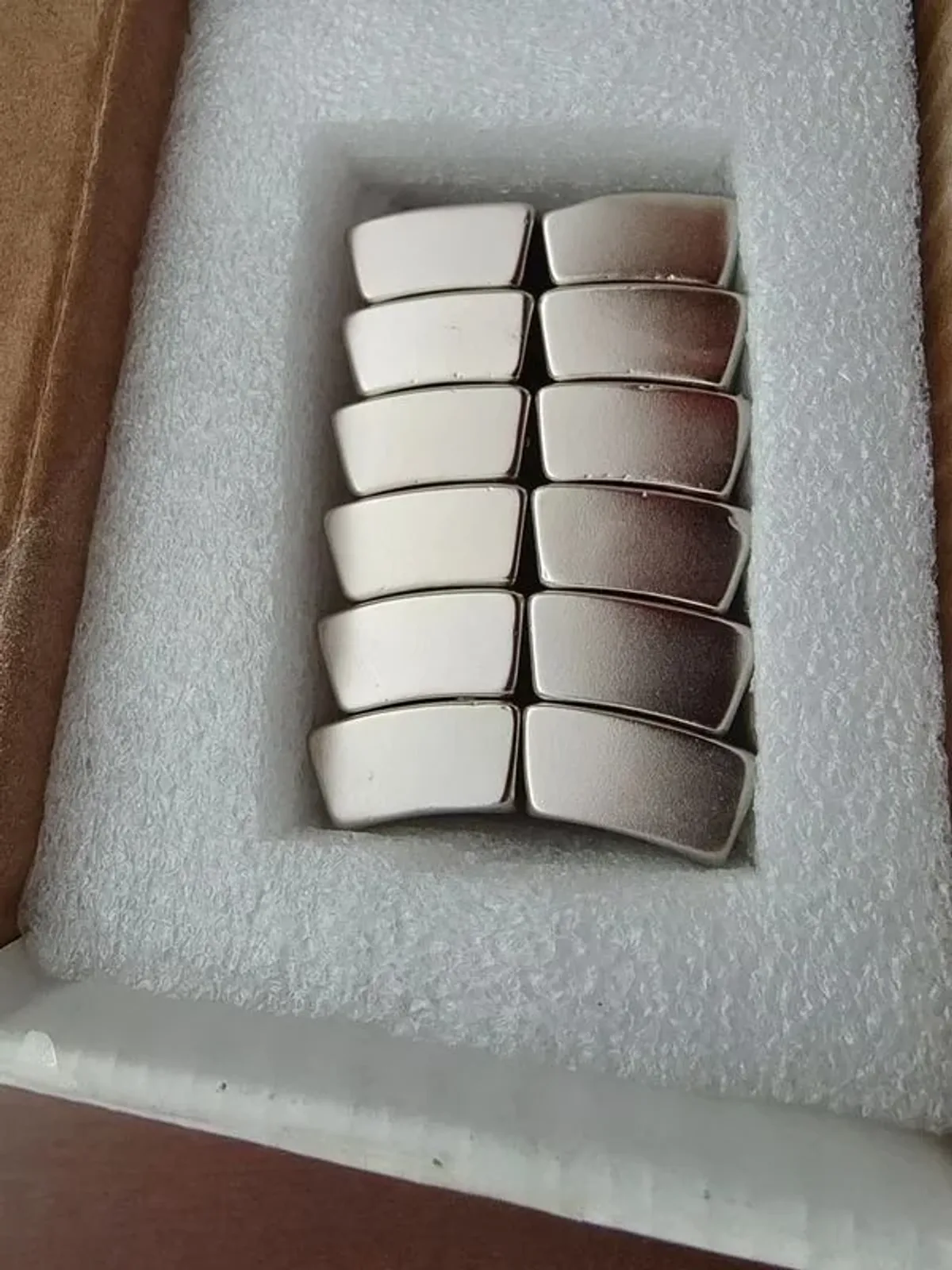
    Discretized segments approximating the ideal Halbach pattern. Cost-effective for production at scale.

Capabilities

What we hold.

  • Array length Up to 2000mm
  • Field strength 0.1–2.0 T at working gap
  • Pole count 2–32 poles
  • Field uniformity ±2% across working volume
  • Magnet grades NdFeB N35–N52, SmCo 2:17
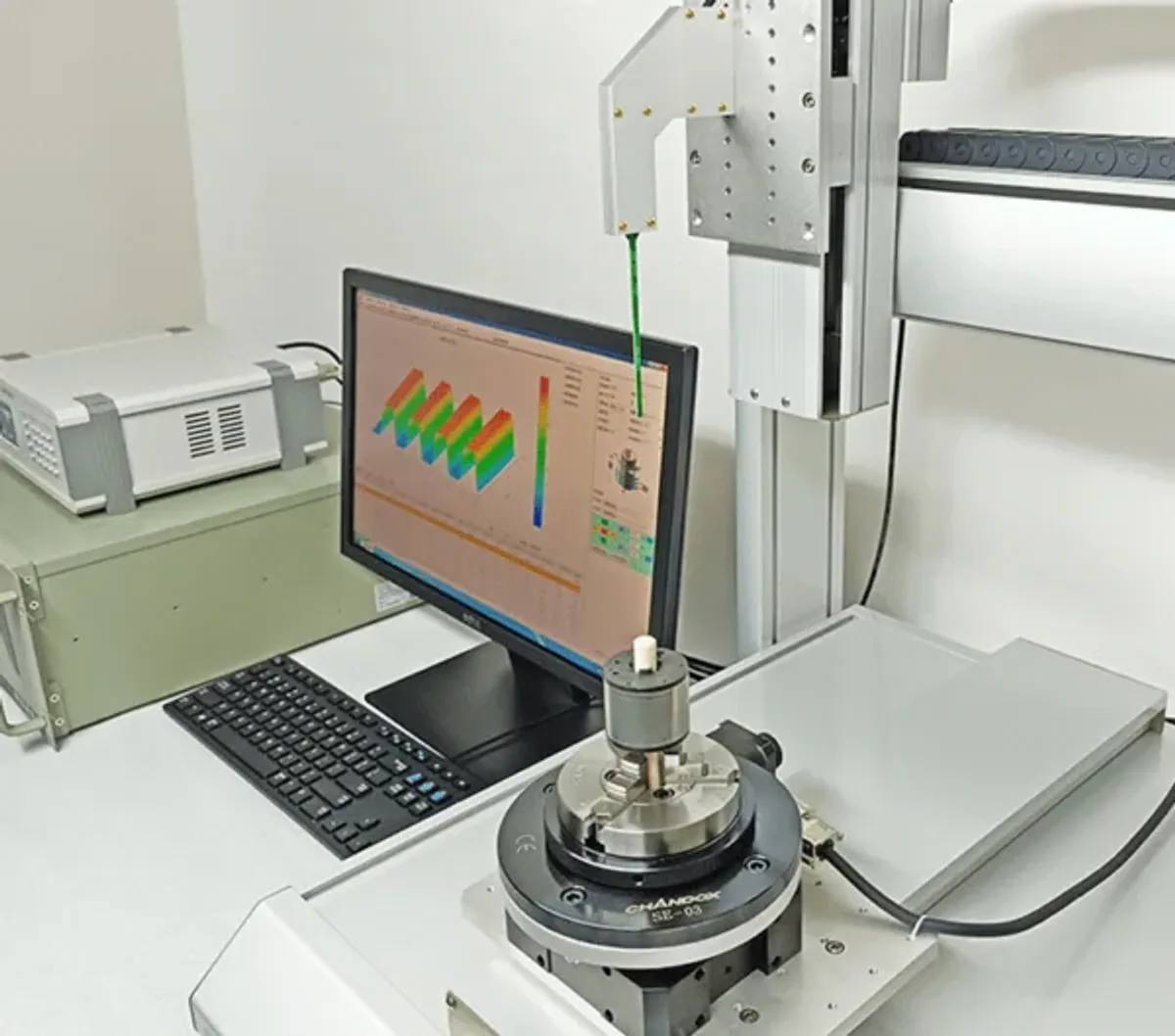
  • Validation 3D Hall sensor mapping
Applications

Where Halbach arrays are specified.

  • Linear motors and actuators

  • Maglev and contactless transport

  • Magnetic refrigeration

  • Particle accelerators

  • Wind turbine generators

  • Free-electron laser systems

Specification guide

Choose a Halbach array with the application in view.

Halbach performance is created by the complete array: segment geometry, magnetization angle, pole pitch, assembly accuracy and the working volume all matter more than a single magnet grade.

A good fit when

The material earns its place.

  • Applications that need a concentrated field with reduced back-iron
  • Linear or cylindrical field profiles with a defined working gap
  • Systems where field uniformity or one-sided access is important
  • Programs able to control segment orientation, fixtures and magnetic safety

Check before release

Resolve these trade-offs early.

  • Field strength and uniformity are highly sensitive to segment angle, gap and assembly error
  • The array can create strong stray fields during assembly, test and transport
  • Eliminating back-iron is not automatic; structural, thermal and magnetic return paths need review
  • The final field map must be measured in the actual working volume, not inferred from catalogue grade
RFQ preparation

Give engineering the information that changes the answer.

A drawing alone may not define the magnetic requirement. These inputs help us recommend the right grade, geometry, coating and inspection plan instead of quoting a generic part.

01

Working volume

Provide the field target, measurement plane, useful volume, air gap, field direction and allowable uniformity variation.

02

Array geometry

Share length, diameter, segment count, pole count, magnetization angle, keying features and non-magnetic structural parts.

03

Thermal and structural

Define temperature, vibration, centrifugal or transport loads, adhesive or mechanical retention and service-life requirements.

04

Assembly safety

Plan magnetized or unmagnetized assembly, handling fixtures, keep-away zones, polarity marking and packaging constraints.

Acceptance planning

Define the evidence before the first production order.

Inspection scope should follow the failure mode. We can align the report format, sample quantity and release criteria during drawing review.

01

3D field map

Map the field across the specified working volume using a calibrated Hall system and the released fixture or coordinate system.

02

Pole orientation

Verify segment polarity, magnetization angle, sequence and indexing before final bonding or encapsulation.

03

Uniformity and leakage

Report field uniformity in the working zone and stray-field readings at agreed external locations.

04

Mechanical retention

Test the final array under temperature, vibration or centrifugal conditions that represent the application.

Buyer questions

The short version before you send a drawing.

Does a Halbach array always remove the need for back-iron?

Not always. A Halbach arrangement can concentrate field and reduce reliance on back-iron, but structural stiffness, thermal paths, leakage, saturation and assembly constraints still determine the final design.

Can you provide the magnets unmagnetized?

Unmagnetized segment supply may simplify assembly and safety, while some programs require pre-magnetized matched parts. The sequence depends on the fixture and array architecture.

How should field uniformity be specified?

Define the working volume, coordinate system, measurement spacing, temperature and allowable deviation. 'Uniform' without a measurement envelope is not an acceptance criterion.

Global magnet shipment preparation
Start a project

Send the drawing. Tell us
what the magnet has to do.

Our engineering team can review material, operating conditions, magnetic requirements, manufacturing route and validation needs before quotation.

RFQ channel rfq@china-empire.com
General service services@china-empire.com
Engineering review Drawings and requirements welcome