Holding duty
Normal pull, shear resistance, vibration and the required safety margin.
MAGNETIC ASSEMBLIES
Pot magnets and mounting assemblies for defined holding requirements.
Review My Holding ApplicationChoose a Mounting InterfaceHolding performance changes with the mating surface, working gap and loading direction. We review the installation, fixing method and environment so the selected magnet assembly and test conditions reflect how the component will actually be used.

FORMS & CONFIGURATIONS
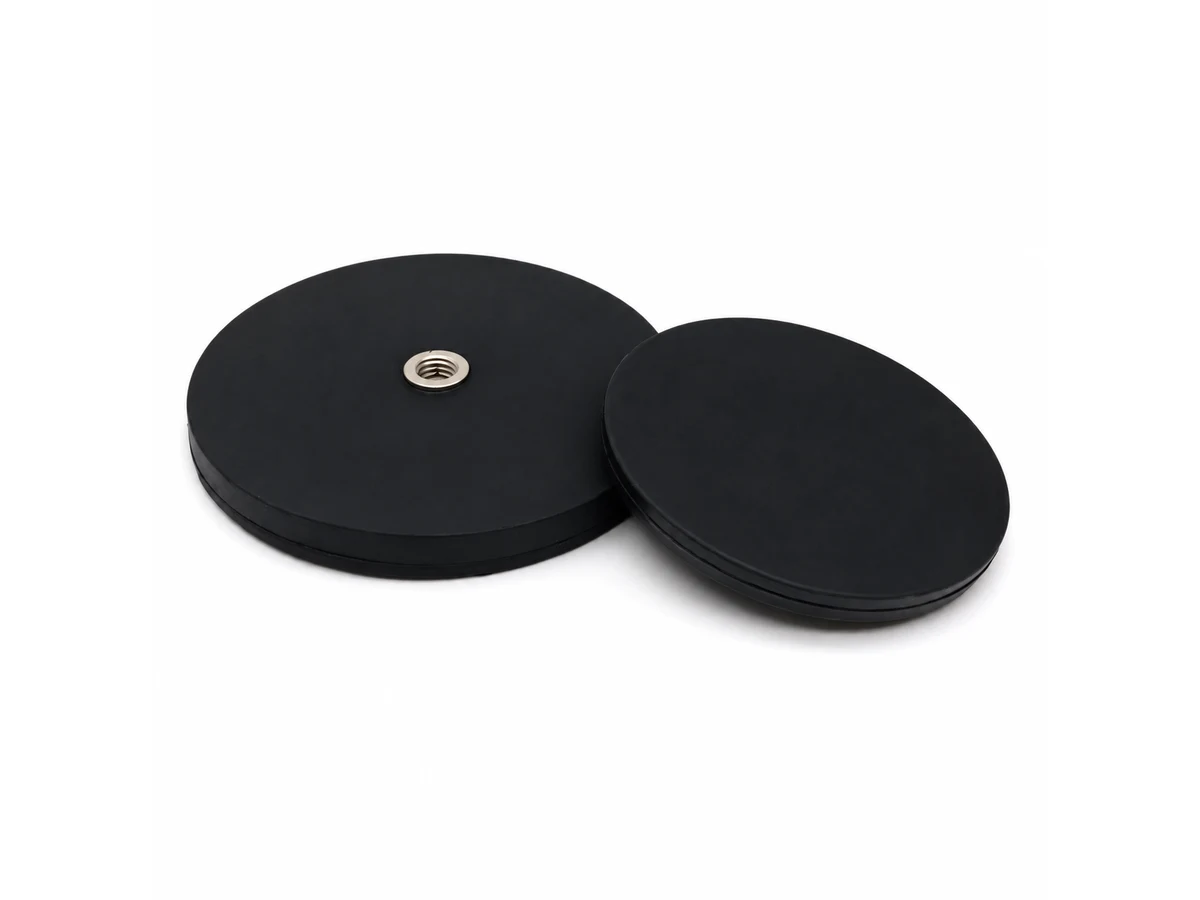
Representative product forms. Final geometry, dimensions and material are confirmed against your drawing.



DESIGN & SELECTION
Thread, screw seat, envelope and fixing loads
Steel grade, thickness, flatness and coating
Pull-off and shear tested separately
Select a category to see the inputs to confirm.
Review This ConfigurationSelection identifies the review scope. Materials, ratings and acceptance criteria remain subject to engineering confirmation.
ENGINEERING REVIEW
A clear specification connects magnetic performance with a practical manufacturing route.
Normal pull, shear resistance, vibration and the required safety margin.
Mating steel grade and thickness, coating, flatness and working air gap.
Thread, screw seat, overall envelope and installation loads.
Temperature, moisture, corrosion exposure and acceptance-test conditions.
QUALITY & RELEASE
Verification follows the component’s function and the agreed inspection plan.
Confirm the material specification and finished dimensions.
Agree the test setup and the performance required in your application.
Maintain sample approval, lot identification and controlled changes.
PRODUCT QUESTIONS
We manufacture and supply pot magnets, mounting magnets and custom magnetic holding assemblies. The magnet material, housing, dimensions and fixing interface are confirmed to the application.
No. A pull test normal to a specified steel surface does not establish resistance to sliding. State both the load direction and the actual mating conditions for testing.
This page does not specify lifting equipment or a rated lifting capacity. Safety-critical or overhead lifting requires a separately engineered and qualified solution; do not use a general holding specification as a lifting rating.
CONTINUE EXPLORING

Magnets, shafts and retention integrated for motor and drive applications.
Explore Product
Precisely oriented magnet arrays for concentrated, application-defined fields.
Explore Product
Non-contact torque transmission for sealed mechanical systems.
Explore ProductFROM YOUR DRAWING TO PRODUCTION
Share your drawing. Define the next step.
Start a Technical Review